
← Back to news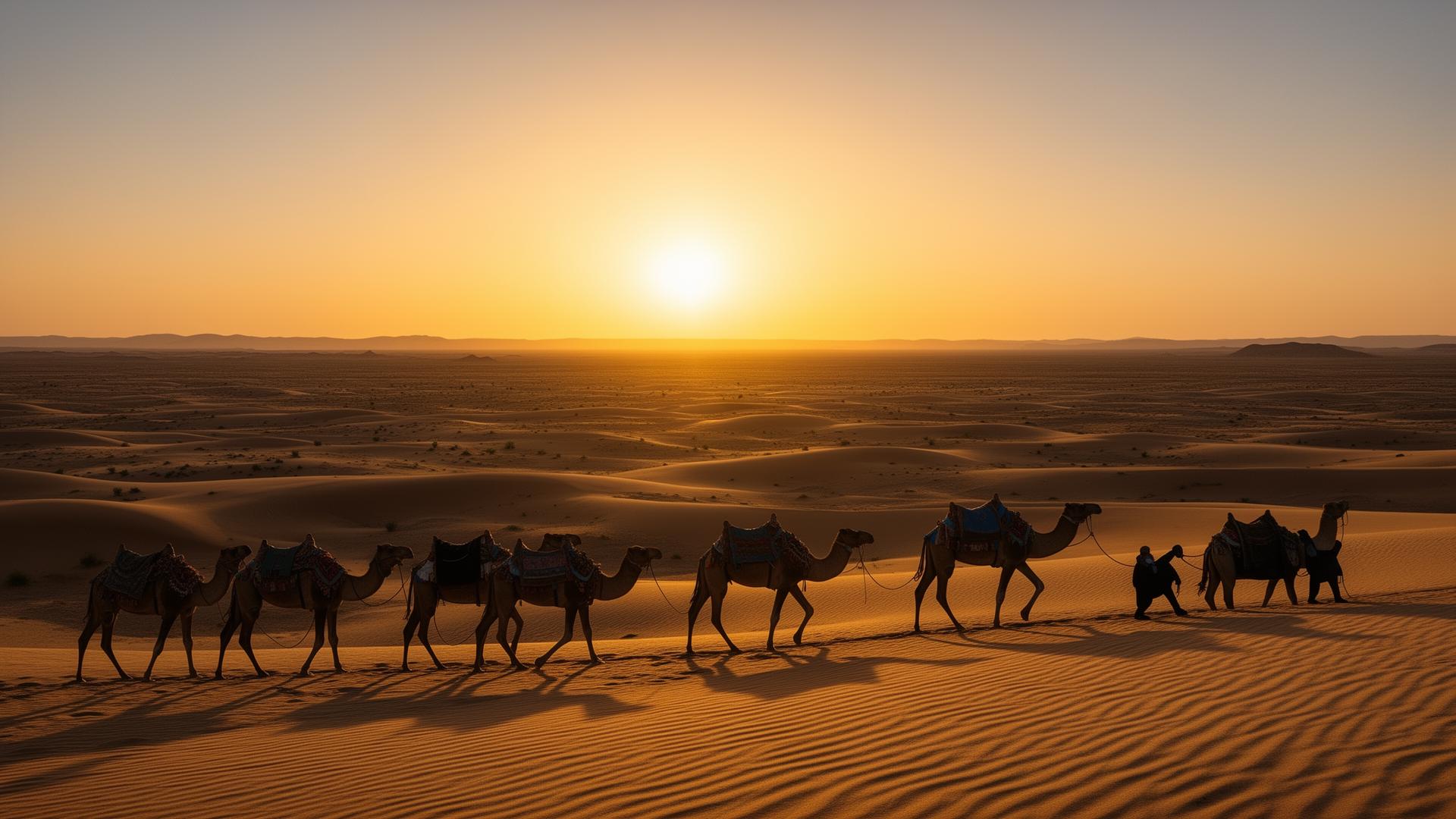
May 2, 2026
The Name That Was Always Here: Maver, Maverannahr, and the Land Beyond the River
When we chose the name Maver Travel, we were thinking about a particular kind of traveler, independent, curious, someone who makes their own path rather than following the one already laid out. But somewhere along the way, we discovered something that made us pause. The word *maver*, in its older, deeper form, was already the name for this land.
A Name Older Than Maps
Long before the modern borders of Uzbekistan were drawn, scholars and geographers writing in Arabic and Persian referred to the heartland of this region by a name that has echoed through history for over a thousand years:
*Maverannahr, ما وراء النهر*
"That which lies beyond the river."
The rivers in question were the Amu Darya, the ancient Oxus, and the Syr Darya: the two great waterways that defined the edges of this land for the civilizations looking in from the west and south. To the Arab geographers of the 8th and 9th centuries, Maverannahr was the world that began where their maps ended. It was the frontier. The threshold of the unknown.
It was, in the truest sense, *beyond*.
The Land That Defined "Beyond"
Maverannahr was not simply a geographic label. It was an idea. This was the region that produced Ibn Sina, born near Bukhara in 980 CE, whose medical encyclopedia shaped European science for five centuries. It was the homeland of Al-Biruni, who calculated the circumference of the Earth with stunning accuracy a thousand years ago. It was the land of Ulugh Beg, the astronomer-king of Samarkand, whose observatory mapped more than a thousand stars before the telescope existed.
The cities of Maverannahr, Samarkand, Bukhara, Khiva, Termez, were not outposts on the edge of civilization. They *were* civilization, for several of the most remarkable centuries in human intellectual history. The Silk Road did not merely pass through them. It was built around them.
What "Maver" Carries
The root of Maverannahr, *mā warāʾ*, is an Arabic prepositional phrase meaning "what is beyond." Over centuries, this root compressed into the shortened form that Persian-speaking scholars and traders used in everyday reference: simply *Maver*.
It is not a coincidence that this same syllable migrated, through different etymological routes, into the English word *maverick*, someone who goes beyond the established boundary, who crosses into territory others haven't yet mapped.
A maverick, etymologically and practically, is someone who goes to Maverannahr.
Why This Matters to Us
We didn't name ourselves after an ancient Persian geography text. We named ourselves after a spirit of independent travel, of choosing your own path, of curiosity over convenience.
But when we found this connection, when we realized that the very land we are dedicated to sharing with the world was once called *Maver* by those who dreamed of reaching it, something clicked into place.
The name was always here. It had been waiting in the geography for more than a thousand years.
An Invitation That Is a Thousand Years Old
The historians and merchants who wrote about Maverannahr wrote about it with longing. It was a place that had to be earned. You crossed deserts and mountain passes to reach it. And when you did, you found cities more sophisticated, more beautiful, and more alive with ideas than you had imagined.
That experience is still available.
Samarkand still glows at sunrise. The tilework of the Registan is still as breathtaking as when Timur's craftsmen set the last piece into place. The tea still tastes the way it always has, poured in a courtyard that has heard six centuries of conversation.
The land has not stopped being extraordinary. It has only become easier to reach.
We think the travelers of a thousand years ago would have found that a fair trade.